Introduction
For many students in Tier-2 and Tier-3 cities in India, choosing a career has traditionally meant preparing for government examinations, pursuing engineering or medicine, or finding a stable job after graduation. While these career paths continue to offer valuable opportunities, the modern employment landscape has expanded significantly. Digital transformation, emerging industries, entrepreneurship, and new skill-based professions are creating exciting possibilities for young people across the country.
However, limited career awareness, a lack of professional guidance, and uncertainty about changing industry requirements can make it difficult for students to explore these alternatives. This is where career counselling becomes important. With the right guidance, students can identify their strengths, explore suitable career options, and make informed decisions about their professional futures.
Understanding the Changing Career Landscape in India
India's employment landscape is evolving with the growth of technology, digital businesses, specialised services, and entrepreneurship. Career opportunities are no longer restricted to traditional professions or major metropolitan cities.
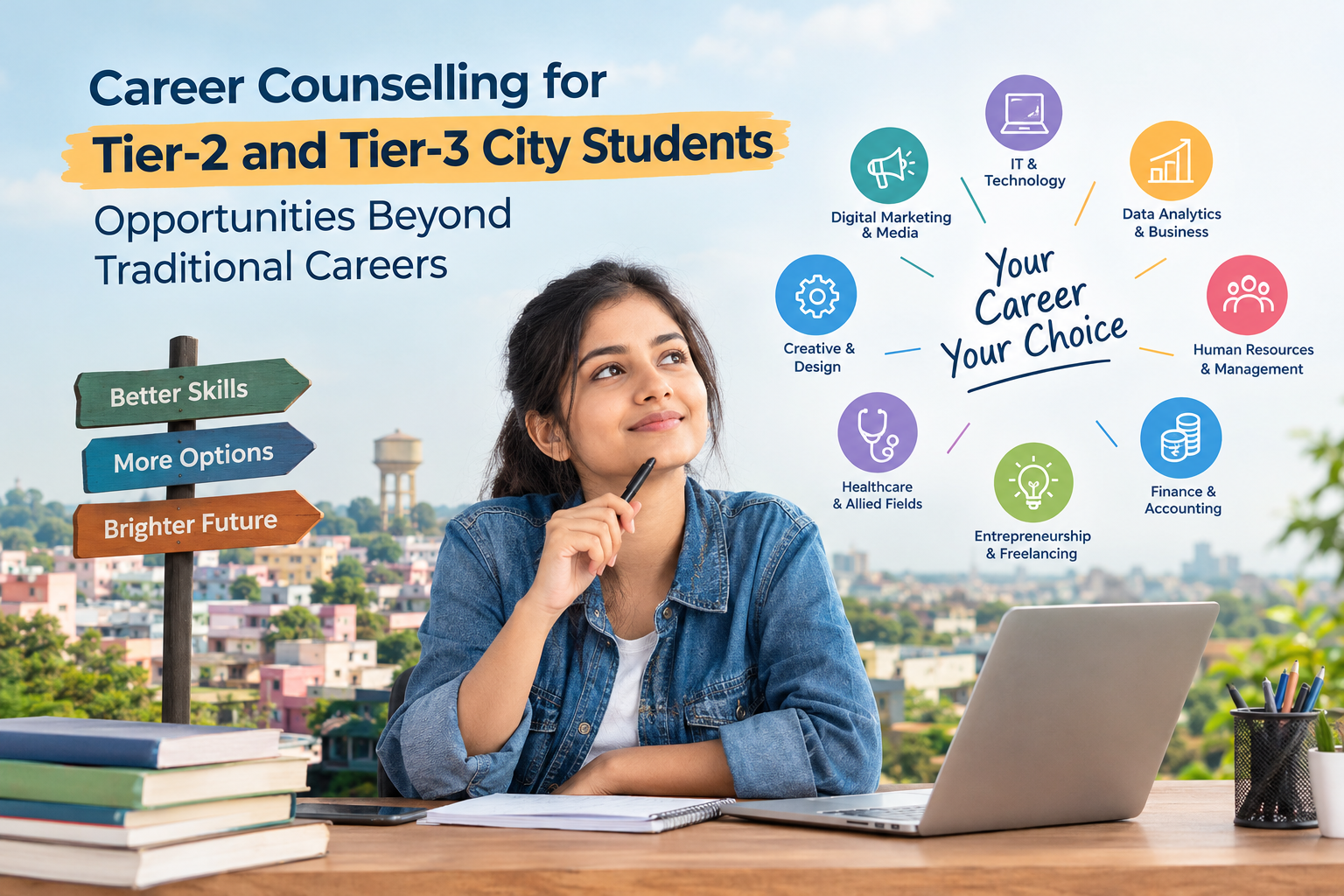
Students from smaller cities can now explore fields such as digital marketing, data analytics, human resources, web development, financial services, content creation, and business management. Online learning platforms and digital recruitment channels have also made professional resources more accessible.
Although access to opportunities varies by location, students can increasingly prepare for roles across industries by developing relevant skills, gaining practical experience, and understanding employer expectations.
Why Career Counselling Matters for Tier-2 and Tier-3 City Students
Career counselling helps students move beyond assumptions and make decisions based on their interests, abilities, qualifications, and long-term goals.
1. Exploring Career Options Beyond Traditional Choices
Many students are familiar with a limited number of career paths because of family expectations, social influences, or a lack of information. Career counselling introduces them to different industries, professional roles, and educational pathways.
For example, a student interested in communication may explore public relations, digital marketing, content writing, or corporate communications instead of choosing a career solely based on conventional expectations.
2. Identifying Individual Strengths and Interests
Every student has a different combination of abilities, interests, and aspirations. Career guidance can help individuals assess their strengths, identify areas for improvement, and understand which professional environments may suit them.
This process encourages students to choose careers based on informed decisions rather than peer pressure or temporary trends.
3. Understanding Industry Requirements
Different professions require different qualifications, technical abilities, and soft skills. Career counselling helps students understand the education, certifications, practical experience, and communication skills needed to enter their preferred fields.
This awareness allows students to plan their learning more effectively and avoid investing time and money in unsuitable courses.
Emerging Career Opportunities Beyond Traditional Professions
Students in smaller cities can consider several career paths depending on their qualifications, interests, resources, and local or remote employment opportunities.
Digital Marketing and Social Media Management
Businesses increasingly use digital platforms to connect with customers and build their brands. Digital marketing offers opportunities in search engine optimisation (SEO), social media management, paid advertising, email marketing, and content strategy.
Students can begin by learning relevant tools, creating sample projects, and developing practical portfolios.
Information Technology and Web Development
Technology-related careers include web development, software testing, cybersecurity, cloud computing, data analytics, and technical support. Some entry-level opportunities prioritise demonstrable skills and practical projects alongside formal qualifications.
Structured learning, hands-on practice, and continuous skill development can help students prepare for suitable roles.
Human Resources and Recruitment
Students interested in communication, organisation, and people management may consider careers in recruitment, HR operations, employee engagement, and talent acquisition. Internships, relevant qualifications, familiarity with recruitment tools, and professional communication skills can support entry into this field.
Finance, Accounting, and Business Operations
Accounting, banking operations, financial services, business administration, and supply chain management offer additional career possibilities. Students can strengthen their profiles through relevant certifications, spreadsheet skills, analytical thinking, and practical experience. Entrepreneurship and Freelancing
Students with creative, technical, or business-oriented interests can explore freelancing and entrepreneurship. Services such as graphic design, content writing, website development, and online business support may provide opportunities to work with clients beyond their immediate geographical area.
However, these paths require patience, consistent effort, financial awareness, and the ability to build trust with clients.
Common Challenges and How Career Guidance Can Help
Despite expanding opportunities, students may face challenges such as limited exposure to different industries, uncertainty about course selection, financial constraints, and a lack of professional networks.
Career counselling can help students compare available options, evaluate course requirements, understand realistic entry-level expectations, and develop practical action plans. Counsellors can also guide students towards appropriate learning resources, internships, skill-development programmes, and job-search strategies.
Parents also play an important role. Encouraging open discussions about interests and abilities can help students explore suitable careers without feeling restricted by social expectations.
Building a Practical Career Roadmap
A structured career plan can turn uncertainty into achievable steps.
Step 1: Assess your interests and abilities. Identify the subjects, activities, and tasks you enjoy, along with the skills you already possess.
Step 2: Research suitable career paths. Understand job responsibilities, eligibility requirements, industry demand, and potential progression.
Step 3: Identify skill gaps. Determine which technical, professional, or communication skills you need to develop.
Step 4: Gain practical exposure. Participate in internships, projects, workshops, volunteering, or relevant entry-level assignments.
Step 5: Prepare for employment. Build a professional CV, practise interviews, improve communication, and learn how to use job portals effectively.
Step 6: Review your progress. Reassess your goals as your interests, experience, and industry requirements evolve.
How SAC Management India Pvt. Ltd. Supports Career Development
SAC Management India Pvt. Ltd. recognises the importance of informed career decisions and professional development. Career guidance can help students and job seekers understand their options, identify skill gaps, and develop a clearer direction for their working lives.
By approaching career planning strategically, individuals can explore suitable opportunities, understand employment expectations, and prepare for the changing demands of the professional world.
For students in Tier-2 and Tier-3 cities, access to reliable career information and structured guidance can be an important step towards making confident and informed decisions.
Conclusion
A student's geographical location should not define the limits of their career ambitions. While students in Tier-2 and Tier-3 cities may face different challenges in accessing information and professional networks, expanding digital opportunities and skill-based careers offer new possibilities.
The key is to explore options carefully, develop relevant skills, gain practical experience, and make decisions aligned with individual strengths and goals. With thoughtful career planning and appropriate professional guidance, students can look beyond traditional career choices and work towards meaningful, sustainable professional growth.
Planning your next career move? Explore career guidance and professional development support from SAC Management India Pvt. Ltd. to take a more informed step towards your future.