Introduction
A website is more than a digital presence for a business. It is a powerful tool for attracting potential customers, building trust, and generating qualified leads. However, simply driving traffic to a website does not guarantee business growth. The real challenge is converting visitors into people who are genuinely interested in a company's products or services.
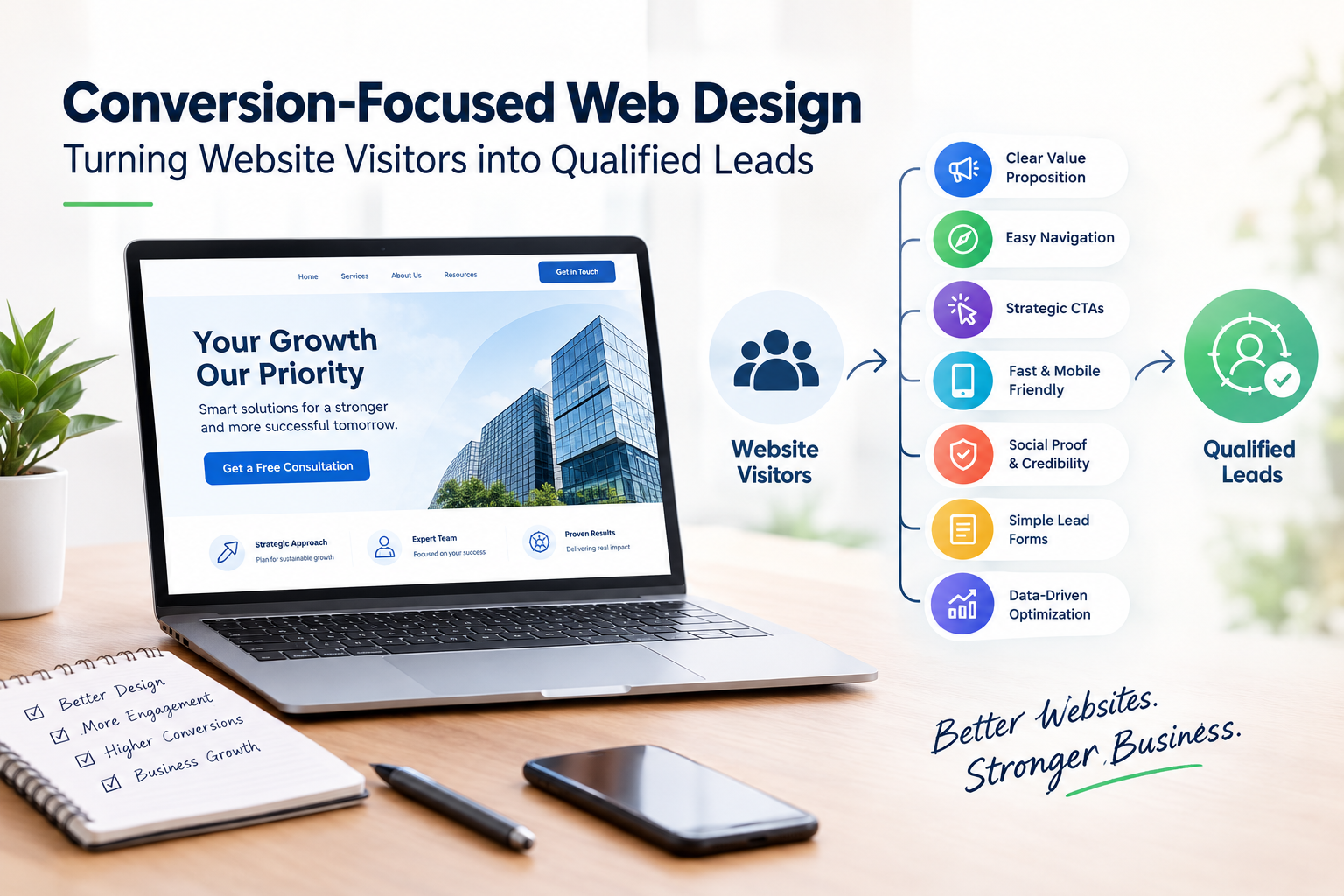
This is where conversion-focused web design becomes essential. By combining user-friendly navigation, compelling content, strategic calls to action, and a seamless browsing experience, businesses can encourage visitors to take meaningful steps toward becoming customers. With the right approach, web design becomes an important part of a company's lead generation strategy.
What Is Conversion-Focused Web Design?
Conversion-focused web design is the process of creating and optimizing a website to encourage visitors to complete specific actions. These actions may include filling out a contact form, requesting a quotation, booking a consultation, subscribing to a newsletter, or downloading a resource.
Unlike traditional website design, which may prioritize appearance alone, conversion-focused design balances visual appeal with functionality and measurable business objectives.
For example, a service-based business may want visitors to request a consultation. Its website should make the service benefits clear, demonstrate credibility, and provide an easily accessible booking form. Every design element should guide users toward this goal without making their journey complicated.
Why Does Conversion-Focused Web Design Matter?
Businesses invest in SEO, paid advertising, and social media marketing to attract website visitors. However, if the website fails to communicate value or guide visitors effectively, those marketing efforts may not deliver the expected results.
A conversion-focused website helps businesses:
1.Generate qualified leads: Encourage inquiries from visitors who are interested in relevant services.
2.Improve user experience: Make information easy to find and actions simple to complete.
3.Build brand credibility: Present a professional image through consistent design and trustworthy information.
4.Support marketing performance: Create a more effective destination for organic and paid traffic.
5.Increase conversion opportunities: Remove unnecessary steps that prevent visitors from taking action.
Ultimately, a well-designed website connects marketing investment with meaningful business outcomes.
Create a Clear and Compelling Value Proposition
When visitors land on a website, they should quickly understand what the business offers, whom it serves, and why its services are worth considering.
A confusing headline or generic introduction can make potential customers leave before exploring further.
To create a strong value proposition, use a clear headline, a concise supporting statement, and a relevant call to action. Focus on the problems your services solve rather than simply listing features.
For example, instead of writing "We Provide Digital Solutions," a business could say, "Build a Faster, Smarter Website That Supports Your Business Growth."
The message should communicate a specific benefit and encourage visitors to learn more.
Design User-Friendly Website Navigation
Effective navigation helps visitors find the information they need without unnecessary effort. If users struggle to locate services, pricing information, or contact details, they may leave the website.
Keep the navigation menu simple and organized. Use descriptive labels such as Services, Industries, About Us, Resources, and Contact. Important pages should be accessible within a few clicks.
A logical page structure also helps search engines understand the website's content and supports better SEO performance.
For businesses offering multiple services, dedicated service pages can address different customer needs and provide more relevant conversion opportunities.
Use Strategic Calls to Action (CTAs)
A call to action tells visitors what to do next. Without clear guidance, even interested prospects may leave without contacting the business.
Effective CTAs should be action-oriented, easy to identify, and relevant to the visitor's stage in the decision-making process.
Examples include:
1.Request a Free Consultation
2.Get a Project Estimate
3.Talk to Our Experts
4.Schedule a Discovery Call
5.Explore Our Services
Place CTAs where they naturally support the user's journey, such as the homepage, service pages, and the end of informative articles. Use contrasting buttons and concise wording to improve visibility.
Avoid overwhelming visitors with too many competing actions. A clear primary CTA makes the next step easier to understand.
Optimize Website Speed and Mobile Responsiveness
Website performance directly affects how visitors experience a business online. Slow-loading pages, broken layouts, and difficult-to-use forms can create frustration and reduce conversion opportunities.
A conversion-focused website should load efficiently across devices and screen sizes. Businesses can improve performance by compressing images, minimizing unnecessary scripts, using reliable hosting, and implementing appropriate caching.
Mobile responsiveness is equally important because many users discover and evaluate services through smartphones.
Ensure that text is readable, buttons are easy to tap, menus work smoothly, and forms are simple to complete on smaller screens. Testing the website across different devices helps identify problems before they affect potential leads.
Build Trust Through Social Proof and Credibility
Visitors are more likely to contact a business when they feel confident about its expertise and reliability. A professional design should therefore communicate trust throughout the customer journey.
Businesses can strengthen credibility by displaying genuine client testimonials, verified reviews, relevant case studies, certifications, and examples of completed projects.
Clearly explain the company's experience, service process, and areas of specialization. Provide accurate contact information and maintain consistent branding across the website.
For B2B businesses, case studies that explain a client's challenge, the solution provided, and the measurable outcome can be particularly effective.
Never use fabricated testimonials or unsupported performance claims. Authentic evidence creates stronger and more sustainable customer relationships.
Create Optimized Lead Capture Forms
Lead capture forms are often the final step between website interest and a business inquiry. However, complicated forms can discourage visitors from completing them.
Ask only for the information needed to qualify and respond to a prospect. For an initial consultation, fields such as name, business email, company name, and service requirement may be sufficient.
Use clear field labels, helpful error messages, and a visible submission button. Explain what happens after submission so visitors know what to expect.
For businesses with complex sales processes, progressive qualification can help gather additional details later instead of requesting too much information upfront.
The objective is to balance ease of completion with the information needed for effective lead follow-up.
Use Analytics to Measure and Improve Conversions
Conversion-focused web design requires continuous evaluation. Businesses should monitor how visitors interact with their websites and identify where potential leads drop off.
Useful metrics include conversion rate, form completion rate, CTA click-through rate, landing page engagement, and lead quality.
Tools such as Google Analytics 4 and Google Search Console can help businesses understand traffic sources, user behavior, and search performance. Form tracking and CRM integration can provide additional insight into which inquiries become genuine sales opportunities.
A/B testing different headlines, CTA wording, layouts, and form structures can reveal which variations perform better. Changes should be based on reliable data rather than assumptions alone.
Importantly, a higher number of form submissions does not always mean better results. Businesses should also evaluate whether leads match their target audience and are likely to convert into customers.
How Softechedge Can Support Conversion-Focused Web Design
Businesses need websites that combine effective design with reliable technology and clear business objectives. Softechedge supports digital growth through web development, website optimization, and related digital solutions.
A strategic approach to website development can help businesses create responsive interfaces, improve navigation, present services clearly, and build smoother customer journeys. When supported by SEO, analytics, and ongoing optimization, these improvements can contribute to stronger lead generation efforts.
The focus should remain on creating a website that serves both its visitors and its business goals.
Conclusion
Conversion-focused web design is about more than attractive visuals. It brings together usability, persuasive messaging, technical performance, trust, and data-driven optimization to turn website traffic into meaningful business opportunities.
By improving navigation, strengthening calls to action, simplifying lead forms, and measuring performance, businesses can create better experiences for potential customers while supporting long-term growth.
A successful website does not simply attract visitors. It helps the right visitors take the right next step. With a thoughtful conversion strategy and continuous improvement, businesses can transform their websites into more effective tools for generating qualified leads and building lasting customer relationships.