Introduction
In 2026, businesses need more than a traditional website to deliver seamless digital experiences. Customers interact with brands through websites, mobile applications, e-commerce platforms, smart devices, and other digital channels. Managing content across these platforms can become challenging when businesses rely on conventional content management systems.
This is where headless CMS development offers a flexible solution. By separating content management from the presentation layer, a headless CMS enables businesses to create, manage, and distribute content across multiple platforms more efficiently. For organizations looking to modernize their digital presence, headless CMS architecture can support scalability, performance, and consistent customer experiences.
What Is Headless CMS Development?
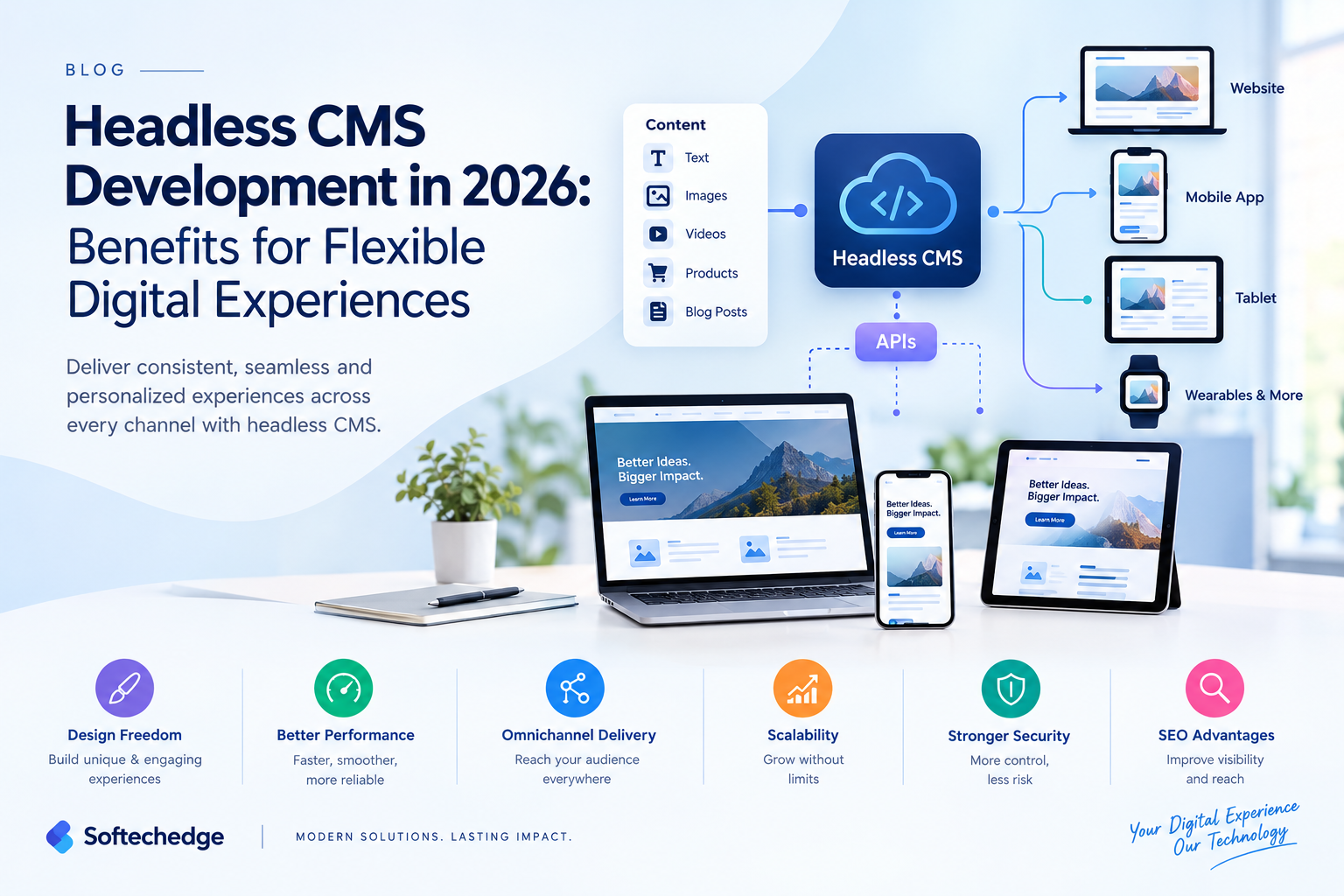
A headless content management system (CMS) is a platform that manages and stores content independently of how and where that content is displayed. Unlike a traditional CMS, which typically combines the backend content system with the frontend website, a headless CMS separates these two components.
Content is delivered through APIs, allowing developers to display it across different digital platforms using technologies such as React, Next.js, Vue.js, or other frontend frameworks.
For example, a business can manage a product description once and distribute it to its website, mobile application, and other connected platforms without maintaining separate content databases for each channel.
This separation provides greater flexibility for businesses that want to build modern, connected digital experiences.
Why Is Headless CMS Development Important in 2026?
Digital expectations continue to evolve, and customers expect websites to load quickly, provide relevant information, and deliver consistent experiences across devices. Businesses also need technology that can adapt to changing requirements without requiring a complete website rebuild.
Headless CMS development addresses these needs by offering greater control over frontend design, content delivery, and technology integration.
It is particularly useful for e-commerce businesses, growing enterprises, digital publishers, and organizations managing multiple websites or customer-facing platforms.
Key Benefits of Headless CMS Development
1. Greater Design and Development Flexibility
One of the biggest advantages of a headless CMS is the freedom to build customized frontend experiences. Developers are not restricted to a predefined presentation layer and can select technologies that best suit business requirements.
This flexibility allows businesses to create unique website layouts, interactive interfaces, and responsive experiences across different devices.
It also makes it easier to update the frontend without significantly changing the underlying content management system.
2. Improved Website Performance
Website speed plays an important role in user experience, engagement, and search visibility. Headless CMS architecture can support faster digital experiences when combined with efficient frontend frameworks, caching, content delivery networks (CDNs), and optimized media. Technologies such as static site generation and server-side rendering can help deliver content efficiently, depending on the website's requirements.
However, performance improvements are not automatic. They depend on implementation quality, hosting infrastructure, caching strategies, and frontend optimization.
3. Omnichannel Content Delivery
Customers may discover a brand through its website, mobile application, online store, or other digital touchpoints. A headless CMS allows businesses to distribute content through APIs across multiple channels.
Instead of creating and maintaining separate content for every platform, teams can manage reusable content centrally.
This approach is valuable for businesses that want to maintain consistent product information, brand messaging, and customer communications across their digital ecosystem.
4. Better Scalability for Growing Businesses
As businesses expand, their digital requirements often become more complex. They may need additional landing pages, new regional websites, multilingual content, or integrations with third-party services.
A headless CMS allows frontend and backend components to evolve independently. This separation can simplify future enhancements and help development teams scale different parts of a digital platform according to demand.
With the right architecture, businesses can introduce new features and digital channels without rebuilding the entire system.
5. Enhanced Security Opportunities
Separating the content management backend from the public-facing website can reduce direct exposure of certain administrative components. Depending on the architecture, businesses may also benefit from controlled API access, secure authentication, and restricted administrative permissions.
However, headless CMS solutions still require proper security practices, including regular updates, API protection, access controls, and monitoring.
A carefully designed implementation helps businesses manage security risks while maintaining reliable content delivery.
6. SEO and Content Management Advantages
A headless CMS can support effective SEO when developers implement technical SEO requirements correctly. These include descriptive URLs, metadata, structured data, XML sitemaps, canonical tags, and mobile-friendly layouts.
Content teams can manage information centrally while developers control how it is rendered and optimized for search engines.
Businesses must ensure that search engines can access important content, particularly when using JavaScript-heavy frontend applications. A headless CMS alone does not guarantee higher rankings; content quality, technical implementation, and overall website experience remain essential.
Headless CMS vs. Traditional CMS: Which Is Better?
A traditional CMS can be a practical choice for small websites that need straightforward content publishing and minimal development effort. It often provides themes, plugins, and integrated editing tools.
A headless CMS is better suited to projects requiring multiple digital channels, customized interfaces, advanced integrations, or independent frontend development.
The right choice depends on business goals, technical resources, budget, content workflows, and long-term plans. Businesses should evaluate both approaches before investing in a new content management architecture.
How Softechedge Helps Businesses Build Modern Web Experiences
Choosing the right technology is an important step toward digital growth. Softechedge provides technology solutions designed to help businesses improve digital capabilities, streamline operations, and build scalable online platforms.
From web development and custom application development to API integration and digital transformation, the right technical approach can help organizations create more flexible digital experiences.
Businesses considering headless CMS development should begin by assessing their existing website, content management requirements, integration needs, and future growth plans. A well-planned implementation can help establish a strong foundation for evolving digital demands.
Conclusion
Headless CMS development in 2026 offers businesses a flexible way to manage content and deliver digital experiences across multiple platforms. Its advantages include greater frontend freedom, centralized content distribution, scalability, and opportunities for performance and security improvements.
However, successful adoption depends on selecting the right platform, planning integrations, and implementing the architecture carefully.
For businesses preparing to modernize their digital presence, headless CMS development can be a valuable investment when aligned with clear objectives and practical requirements.
Ready to build a more flexible digital experience for your business? Connect with Softechedge to explore modern web development solutions tailored to your goals.