Introduction
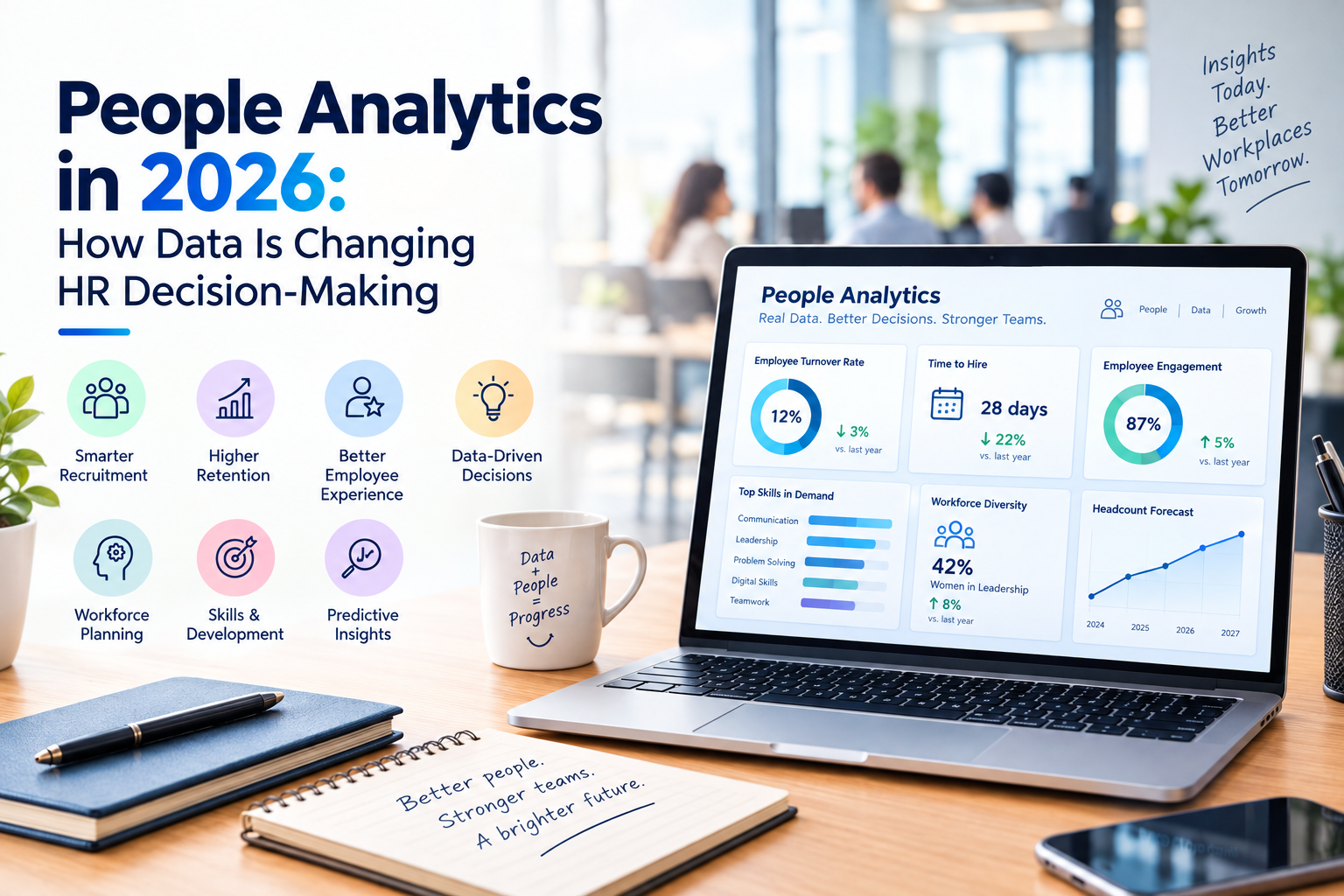
Human Resources has always been about people, but in 2026, it is increasingly becoming a data-driven function. Organisations today have access to more workforce information than ever—from recruitment and employee performance to engagement, retention and skills. The real challenge is no longer collecting data; it is knowing how to turn that data into meaningful decisions.
This is where people analytics is changing the way HR departments operate. Instead of relying only on assumptions, experience or traditional reports, HR professionals can use workforce data to identify patterns, understand employee needs and make more informed business decisions.
What Is People Analytics?
People analytics is the practice of collecting, analysing and interpreting employee and workforce data to support better HR and business decisions. It can include information related to:
1.Recruitment and hiring
2.Employee performance
3.Attendance and workforce productivity
4.Employee engagement
5.Attrition and retention
6.Compensation and benefits
7.Skills and training
8.Workforce planning
The goal is not simply to create charts and reports. Effective people analytics helps HR answer practical questions such as: Why are employees leaving? Which recruitment channels produce better candidates? What skills will the organisation need next year?
Why People Analytics Matters in 2026
The workplace is changing rapidly. AI adoption, evolving employee expectations, skills shortages and new approaches to work are creating more complex workforce challenges.
In this environment, traditional HR practices alone may not provide enough insight. Data can help HR teams identify trends earlier and respond more strategically.
For example, instead of waiting for an annual employee survey to discover engagement problems, HR can monitor multiple indicators over time. Similarly, recruitment data can reveal which sources are producing quality candidates and where hiring processes are slowing down. People analytics therefore helps HR move from reactive decision-making to proactive workforce management.
From HR Reports to Strategic Insights
Traditional HR reporting often answers questions about what happened.
For example:
1.How many employees joined this month?
2.How many employees left?
3.What was the average hiring time?
4.How many employees attended training?
People analytics goes a step further by asking why it happened and what could happen next. Suppose an organisation notices that employee turnover is increasing. Instead of simply reporting the attrition rate, an HR team can analyse patterns across departments, roles, tenure, compensation, manager relationships and engagement data.
This can help identify potential reasons behind employee exits and allow management to take targeted action.
People Analytics in Recruitment
Recruitment is one of the areas where workforce data can make a significant difference.
HR teams can analyse metrics such as:
1.Time-to-hire
2.Cost-per-hire
3.Candidate source
4.Interview-to-selection ratio
5.Offer acceptance rate
6.Quality of hire
7.Early-stage employee retention
This information can help organisations understand which recruitment strategies are actually delivering results.
For a talent platform like Jobsglint, data-driven recruitment can also support more structured talent identification by helping employers focus on relevant skills, experience and role requirements rather than relying solely on resumes or intuition.
Predicting Employee Attrition
Employee turnover can be expensive for organisations. Beyond recruitment costs, companies may also lose productivity, knowledge and team stability when experienced employees leave. People analytics can help HR identify patterns associated with attrition. Factors such as tenure, role changes, engagement scores, career progression and workload may reveal potential retention risks.
However, predictive analytics should be used responsibly. Data should support conversations and better decisions—not label employees or make important decisions without human judgement.
Skills and Workforce Planning
One of the biggest HR challenges in 2026 is identifying the skills organisations will need in the future.
People analytics can help companies compare their current workforce capabilities with future business requirements.
This can reveal skill gaps and help HR decide whether to hire, reskill or upskill employees. For example, if a company plans to adopt new digital technologies, workforce data can help identify which employees already possess relevant skills and where additional training or new hiring may be required.
This makes workforce planning more strategic and connected to business growth. Employee Experience Through Data
Employee experience is another important area where analytics can provide valuable insights. HR teams can combine information from employee surveys, engagement platforms, performance discussions and workforce trends to understand how employees experience the organisation.
The objective should not be to monitor every employee activity. Instead, responsible analytics should help organisations identify broader workplace patterns and improve areas such as communication, learning opportunities, recognition and career development.
The Human Side of People Analytics
Despite the growing role of technology, people analytics does not mean replacing human judgement.
Employee data can show what is happening, but understanding why it is happening often requires conversations, empathy and context.
HR professionals therefore need to combine analytical thinking with communication and emotional intelligence. The strongest HR decisions in 2026 will come from bringing together data, technology and human understanding.
Data Privacy and Ethical HR
More workforce data also means greater responsibility.
Organisations must ensure that employee information is collected, stored and used responsibly. Transparency, confidentiality, appropriate access controls and compliance with applicable privacy requirements should remain priorities.
Employees should understand how their data is being used, particularly when analytics or AI tools influence workplace decisions.
Trust is essential. Without it, even sophisticated people analytics systems can create resistance rather than value.
The Future of People Analytics
People analytics is becoming an important part of modern HR strategy. As organisations adopt AI and increasingly sophisticated workforce technologies, HR teams will have more opportunities to understand talent, improve employee experiences and support business planning.
The future is not about choosing between data and people. It is about using data to understand people better.
For organisations looking to build stronger teams, improve hiring and prepare for changing workforce needs, people analytics can provide a valuable foundation for smarter decision-making.
In 2026, the most effective HR departments will not simply collect workforce data—they will know how to turn it into meaningful action.