Introduction
In today’s fast-moving business environment, teams need to communicate quickly, access information easily, and complete tasks without unnecessary delays. Traditional communication methods can sometimes create information gaps, slow down approvals, and make it difficult for employees to stay connected while working remotely or across different locations. This is where mobile app development can play an important role.
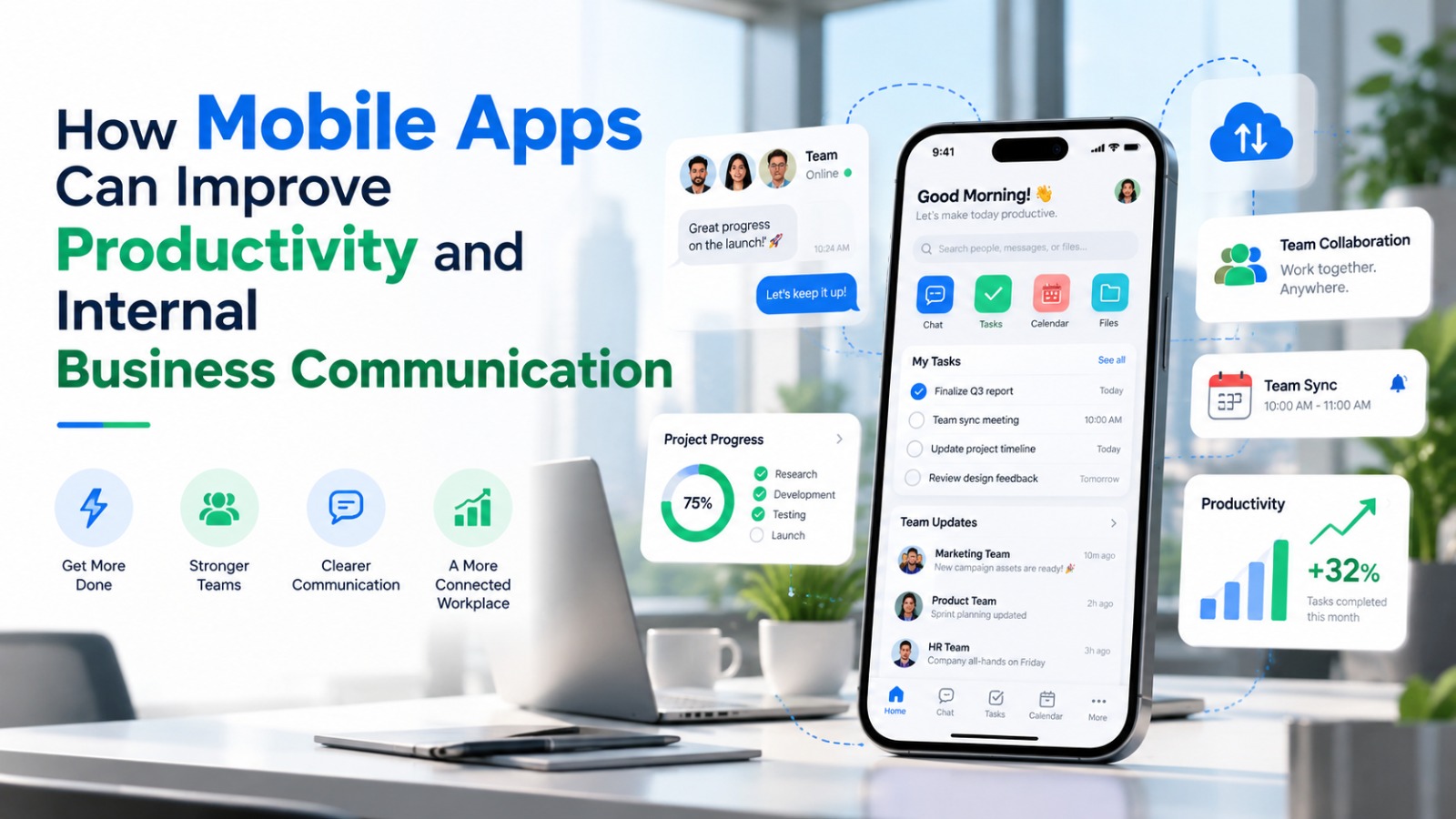
A well-designed business mobile app can bring communication, task management, document access, workflows, and essential business information into one convenient platform. With the right technology partner, businesses can develop custom applications that match their operational requirements and support a more connected and productive workforce.
Faster and More Direct Internal Communication
Emails and conventional communication channels can make important messages difficult to track, especially when employees receive large volumes of information every day. A dedicated internal business app can provide a centralized communication environment.
Employees can receive announcements, updates, reminders, alerts, and important notifications directly through the application. Teams can also use in-app communication features to share information related to projects, departments, or daily operations.
This helps reduce communication delays and ensures that employees have access to relevant information when they need it.
Access Business Information from Anywhere
Modern organizations often have employees working from offices, client locations, production facilities, branches, or remotely. Mobile applications can provide secure access to important business information regardless of location.
Depending on the organization's requirements, an app can allow employees to view schedules, company updates, project information, customer details, inventory data, reports, or other authorized resources.
This accessibility can reduce dependency on a particular workplace or desktop system and help employees remain productive while working from different locations.
Simplified Task and Project Management
Managing tasks through multiple emails, spreadsheets, and messages can become complicated as projects grow. A custom mobile application can bring task management into a centralized system.
Managers can assign responsibilities, set deadlines, monitor progress, and provide updates, while employees can view their assigned tasks and update their status through the app.
This creates greater visibility into ongoing work and helps teams understand priorities. Notifications and reminders can also help employees stay aware of approaching deadlines and pending activities.
Faster Approvals and Decision-Making
Business processes often slow down when approvals depend on employees being physically present in the office. Mobile applications can help digitize approval workflows.
For example, employees may submit leave requests, expense claims, purchase requests, or other documents through an application. Authorized managers can review and approve these requests from their mobile devices.
By reducing manual paperwork and unnecessary waiting periods, businesses can create more efficient workflows and speed up routine decisions.
Better Collaboration Between Departments
Different departments often need to exchange information to complete shared processes. When information is scattered across different platforms, collaboration can become difficult.
A centralized business app can provide role-based access to relevant information and workflows. Sales teams, HR departments, finance teams, operations, and management can access the information required for their responsibilities.
This can help reduce information silos and create smoother coordination between different parts of an organization.
Improved Employee Productivity
Productivity is not simply about making employees work faster. It is also about removing unnecessary steps that consume valuable time.
A mobile application can automate or simplify repetitive activities such as attendance tracking, task updates, reporting, notifications, document requests, and routine approvals. When employees spend less time searching for information or following up on administrative processes, they can focus more attention on their core responsibilities.
Real-Time Notifications and Updates
Timely information can be particularly important for businesses dealing with customers, field teams, operations, or time-sensitive activities.
Push notifications can instantly inform employees about important announcements, task assignments, schedule changes, system alerts, or urgent requests.
Instead of employees repeatedly checking emails or internal systems for updates, relevant information can reach them directly through the application.
Secure Communication and Controlled Access
Internal business communication often involves confidential company information. Security therefore needs to be considered during the entire app development process.
Custom applications can incorporate authentication, role-based access, encrypted data transmission, secure APIs, and other appropriate security measures. Access can also be structured according to employee roles, ensuring that users only see the information relevant to their responsibilities.
A secure architecture helps businesses manage internal information more responsibly while supporting convenient access.
Integration with Existing Business Systems
A mobile app does not necessarily need to operate as a standalone platform. It can be integrated with existing business technologies through APIs and other suitable integrations. For example, an application can connect with CRM, HRMS, ERP, cloud services, payment systems, databases, or internal software. This can help employees access information from different systems through a more convenient interface.
Effective integration can also reduce duplicate data entry and improve information consistency across business operations.
Building a More Connected Workplace with SoftechEdge
Every organization has different workflows, communication requirements, and technology infrastructure. Instead of relying on a generic application, businesses can consider custom app development based on their specific operational needs.
SoftechEdge can help businesses approach app development with a focus on functionality, usability, scalability, integration, and security. From understanding the initial business requirement to developing and maintaining the application, a structured development approach can help turn business processes into practical digital solutions.
Conclusion
Mobile applications are becoming valuable tools for businesses that want to improve internal communication and workplace productivity. By combining communication, task management, notifications, approvals, information access, collaboration, and system integration within a single platform, organizations can simplify everyday operations.
The goal of business app development is not simply to create another digital tool. It is to build a solution that addresses genuine workplace challenges and helps employees work more efficiently. With a well-planned and scalable mobile application, businesses can create a more connected, responsive, and digitally enabled workplace.