Introduction
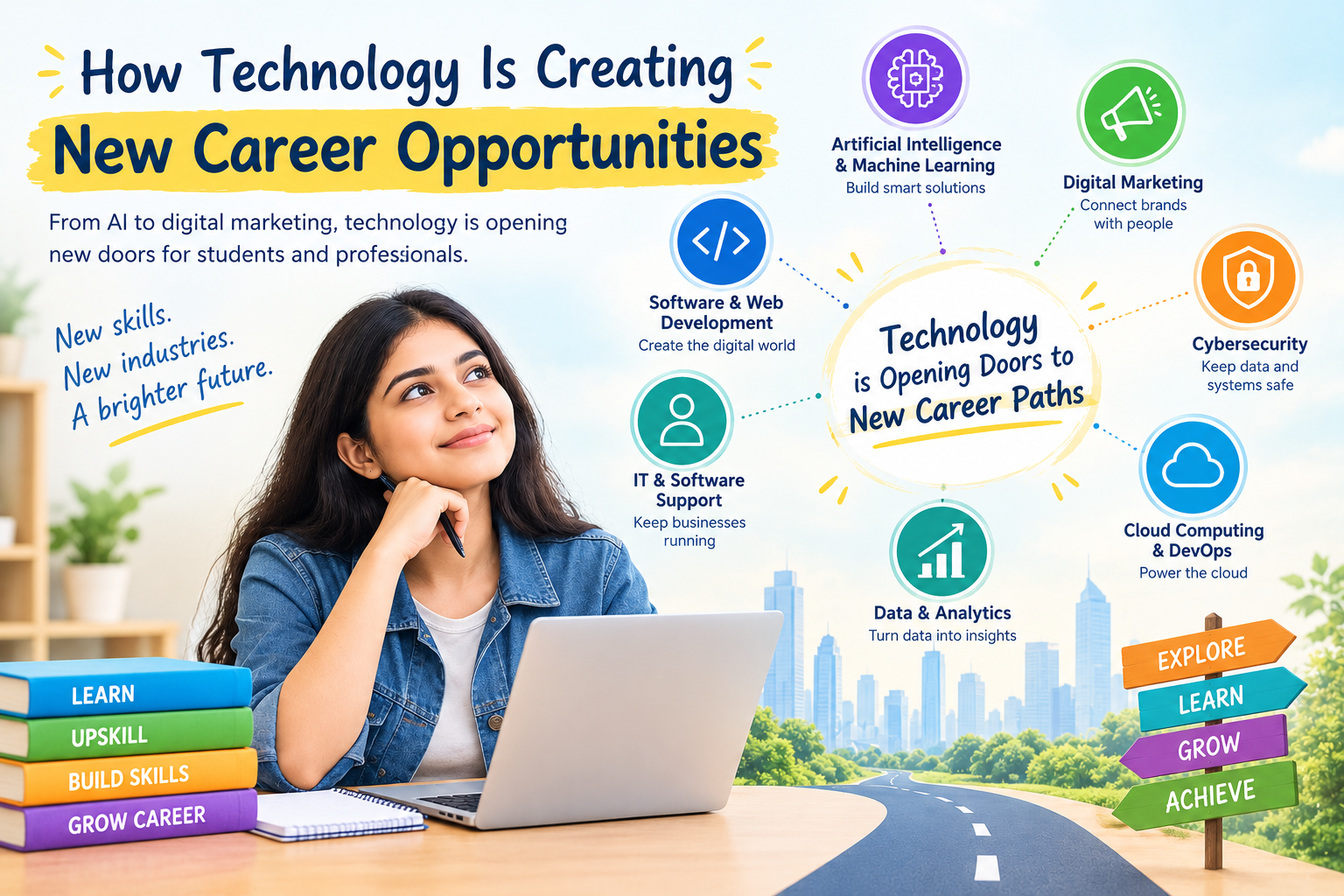
Technology has transformed the way people live, learn, communicate, and work. From artificial intelligence and cloud computing to digital marketing and software development, technological advancements are creating new industries and changing the skills employers need. As a result, students and professionals today have access to career opportunities that were not widely available a decade ago.
For students choosing their career path, this changing environment can be both exciting and confusing. Understanding emerging career options and identifying the right skills can make it easier to make informed career decisions. This is where career counselling and skill development can play an important role.
The Changing World of Careers
Traditional career paths are no longer the only options available to students and professionals. Technology has introduced new roles across industries, while also transforming existing jobs.
For example, businesses now require professionals who can manage social media, analyze data, develop websites, protect digital systems, optimize online advertising, and work with artificial intelligence tools.
This means that career opportunities are increasingly connected to a person's skills, interests, and ability to adapt, rather than being limited to a particular academic background.
How Technology Is Creating New Career Opportunities
1. Artificial Intelligence and Automation
Artificial intelligence has become an important part of modern businesses. Organizations are using AI for customer service, data analysis, content creation, automation, and decision-making support.
This has created opportunities in areas such as:
1.AI development
2.Machine learning
3.Data analysis
4.AI-assisted content creation
5.AI product management
6.Automation
7.Prompt engineering and AI operations
At the same time, professionals in traditional fields are increasingly expected to understand how AI tools can improve their productivity.
2. Growth of Software and Web Development
Almost every modern organization needs a digital presence. Websites, mobile applications, e-commerce platforms, and business software have therefore become essential.
This has increased demand for professionals with skills in:
1.Web development
2.Full-stack development
3.Front-end development
4.Back-end development
5.Mobile application development
6.Database management
7.Software testing
Students who enjoy problem-solving and technology can explore these areas as potential career paths.
3. Expansion of Digital Marketing
The growth of the internet has changed how businesses reach customers. Companies increasingly use search engines, social media, websites, email, and online advertising to promote their products and services.
This has created career opportunities in:
1.Social media management
2.Search Engine Optimization (SEO)
3.Performance marketing
4.Content marketing
5.Email marketing
6.Search Engine Marketing (SEM)
7.Digital analytics
Digital marketing can also be attractive to individuals who enjoy communication, creativity, research, and understanding consumer behaviour.
4. Cybersecurity and Digital Safety
As businesses become more dependent on digital systems, protecting information has become increasingly important. Cyberattacks, data breaches, and online fraud have made cybersecurity an important area for organizations.
Career opportunities include cybersecurity analysts, security engineers, ethical hackers, security consultants, and information security professionals. People interested in technology, investigation, and problem-solving can explore cybersecurity as a potential career direction.
5. Cloud Computing and DevOps
Businesses are increasingly using cloud platforms to store data, run applications, and manage digital infrastructure. This has increased the importance of cloud computing and DevOps skills. Professionals can build careers in areas such as cloud administration, cloud engineering, DevOps, infrastructure management, and cloud security.
These fields can offer opportunities for people who enjoy working with technology, systems, and technical problem-solving.
6. Data and Analytics Careers
Businesses generate huge amounts of information through websites, applications, transactions, customer interactions, and digital platforms. Organizations need professionals who can convert this information into useful insights.
This has increased opportunities in:
1.Data analytics
2.Business intelligence
3.Data science
4.Data visualization
5.Market research
6.Business analytics
People with an interest in mathematics, research, logical thinking, or business decision-making may find these areas worth exploring.
Technology Is Also Changing Non-Technical Careers
Technology-driven careers are not limited to programming or engineering. Almost every profession is being influenced by digital tools.
Human resources professionals use recruitment software and analytics. Marketing teams use automation and analytics platforms. Teachers use digital learning systems. Designers work with digital design tools, while finance professionals use advanced software for analysis and reporting.
Therefore, digital literacy has become valuable across many career paths.
Why Skills Matter More Than Ever
Technology changes quickly, which means that learning should not stop after completing a degree. Students and professionals need to continuously develop relevant skills.
A strong career plan should consider three important factors:
Interest: What type of work do you enjoy?
Strengths: What skills and abilities do you already have?
Market relevance: Which skills are currently useful and likely to remain valuable?
Combining these factors can help individuals make more informed career decisions.
The Role of Career Counselling
With so many emerging career options, choosing the right path can sometimes feel overwhelming. A student may know that they want a technology-related career but may not know whether web development, data analytics, cybersecurity, digital marketing, or another field is suitable for them.
Career counselling can help individuals understand their interests, strengths, educational options, skill requirements, and possible career pathways.
At Skill Excellent, career guidance can help learners approach career decisions with greater clarity and connect their interests and abilities with suitable learning and career opportunities.
Conclusion
Technology is not simply creating new jobs; it is transforming the way careers are built. From artificial intelligence and software development to digital marketing, cybersecurity, cloud computing, and data analytics, emerging technologies are opening new possibilities for students and professionals.
However, choosing a career should not be based only on the popularity of a particular technology. A successful career path should consider a person's interests, strengths, skills, learning goals, and professional aspirations.
With the right career guidance and continuous skill development, learners can better understand the changing employment landscape and prepare themselves for opportunities in the technology-driven future.