Introduction
In today’s digital-first business environment, having a website is no longer enough. Businesses need websites that are fast, responsive, easy to navigate, and capable of delivering a smooth experience across devices. A slow or poorly optimized website can affect user engagement, conversions, search visibility, and overall brand perception.
This is where Core Web Vitals become important. These metrics help businesses and developers understand key aspects of real-world website performance and user experience. For companies investing in professional web development, monitoring and improving these metrics can be an important part of building a reliable digital presence.
What Are Core Web Vitals?
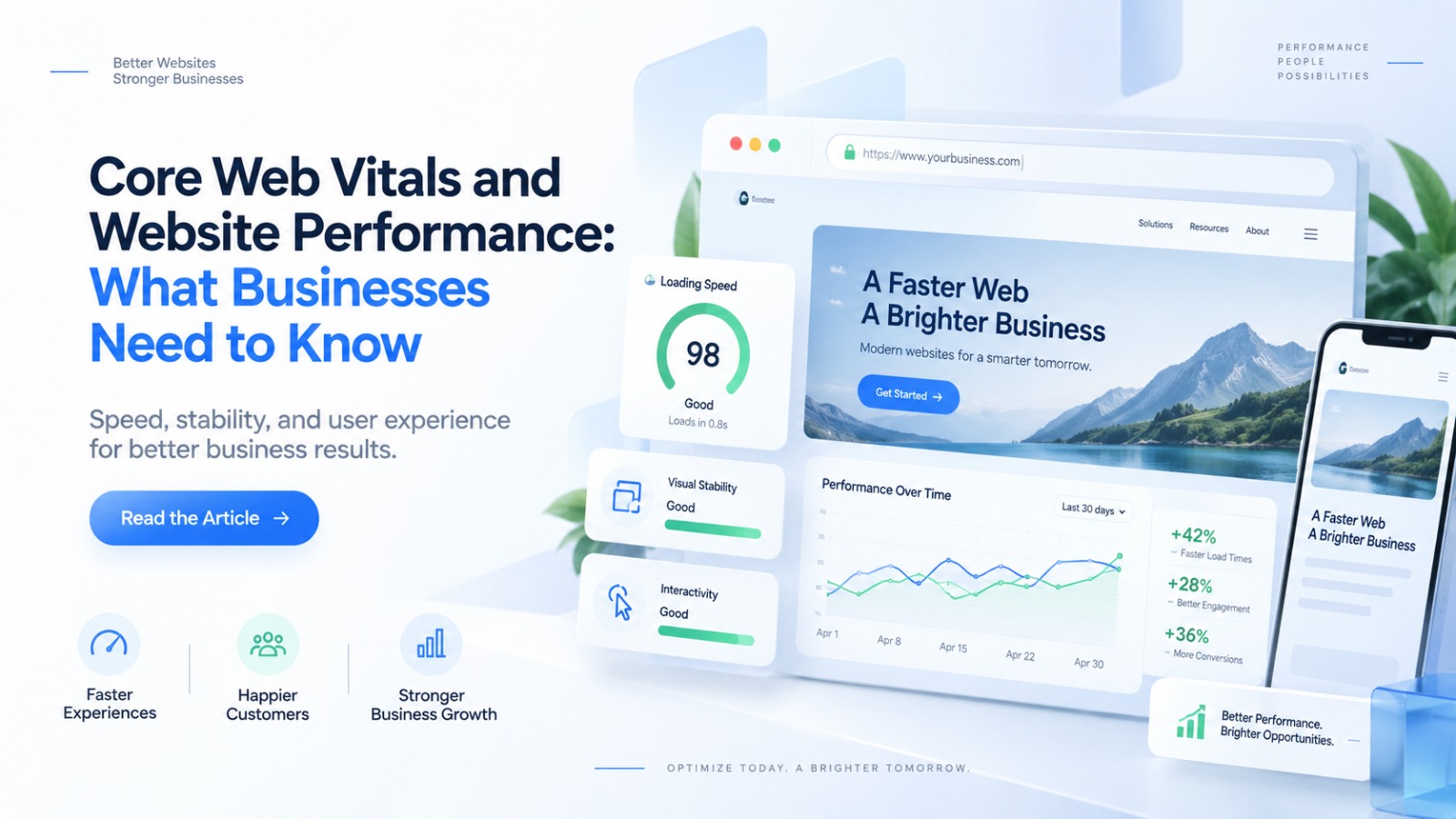
Core Web Vitals are a set of user-focused performance metrics used to evaluate important aspects of a web page experience. They primarily measure how quickly content appears, how responsive a page is to user interactions, and how stable the page remains while loading.
The three current Core Web Vitals are:
Largest Contentful Paint (LCP): Measures loading performance.
Interaction to Next Paint (INP): Measures responsiveness to user interactions.
Cumulative Layout Shift (CLS): Measures visual stability.
Together, these metrics provide developers and businesses with useful indicators of how users experience a website.
Largest Contentful Paint (LCP): Measuring Loading Performance
LCP focuses on how quickly the largest visible content element loads, such as a prominent image, heading, or other major content block.
A slow LCP can make visitors feel that a website is taking too long to load, particularly when accessing it through mobile networks or less powerful devices.
Businesses can improve loading performance through techniques such as:
1.Optimizing images and media
2.Reducing unnecessary code
3.Improving server response times
4.Using efficient caching
5.Optimizing fonts and other page resources
6.Using suitable content delivery solutions
A faster-loading website can create a better first impression and help visitors reach important information sooner.
Interaction to Next Paint (INP): Measuring Responsiveness
INP evaluates how quickly a website responds visually after a user interacts with it. Interactions may include clicking a button, selecting a menu, entering information, or using other interactive elements.
A website may appear to load quickly but still feel frustrating if buttons, forms, menus, or other functions respond slowly.
Improving INP may involve optimizing JavaScript, reducing unnecessary processing, minimizing long-running tasks, and designing interactive features efficiently.
For businesses, responsive interactions are particularly important on websites where users need to complete actions such as registrations, enquiries, purchases, bookings, or form submissions.
Cumulative Layout Shift (CLS): Creating Visual Stability
Have you ever tried clicking a button on a website only to see it move because another element suddenly appeared? This is an example of poor visual stability.
CLS measures unexpected layout movement during page loading. Images without defined dimensions, dynamically inserted content, advertisements, and improperly loaded fonts can contribute to layout shifts.
Developers can reduce CLS by reserving appropriate space for images and dynamic elements, managing fonts efficiently, and ensuring that page components load in a predictable manner. A visually stable website makes navigation easier and reduces accidental clicks.
Why Core Web Vitals Matter to Businesses
Core Web Vitals are not simply technical measurements for developers. Website performance can influence the overall digital experience customers have with a business.
A slow, unresponsive, or unstable website can create friction at important stages of the customer journey. Visitors may leave before exploring products or services, completing forms, or making purchases.
Performance is particularly important for:
1.E-commerce businesses
2.Service providers
3.Lead-generation websites
4.Corporate websites
5.Online platforms
6.Educational websites
7.Mobile-focused businesses
A well-optimized website can help create a smoother journey from the first visit to the desired action.
Core Web Vitals and SEO
Website experience is also relevant to search visibility. Google incorporates page experience signals, including Core Web Vitals, into its broader search systems.
However, good Core Web Vitals do not guarantee higher search rankings by themselves. Search visibility depends on many factors, including content relevance, technical SEO, website structure, authority, and search intent.
For businesses, the practical approach is to treat performance as one part of a broader SEO and digital strategy rather than as a standalone ranking solution.
How Web Development Supports Better Performance
Website performance should ideally be considered during development rather than addressed only after a website becomes slow.
A professional web development process can include responsive architecture, optimized code, efficient databases, appropriate image formats, caching strategies, mobile optimization, and performance testing.
Developers can also identify unnecessary scripts, inefficient third-party integrations, and technical bottlenecks that may affect the user experience.
Regular performance monitoring is equally important because websites change over time. New plugins, features, images, tracking tools, and content can gradually affect performance.
Building a Performance-Focused Website with SoftechEdge
At SoftechEdge, web development goes beyond creating attractive web pages. A business website should also be designed around performance, usability, scalability, security, and business objectives.
From responsive websites and custom web development to performance optimization and ongoing website maintenance, a structured development approach can help businesses build a stronger digital foundation.
The objective is simple: create websites that are not only visually engaging but also fast, functional, user-friendly, and ready to support business growth.
Final Thoughts
Core Web Vitals provide businesses with a practical way to understand important elements of website experience. LCP focuses on loading, INP on responsiveness, and CLS on visual stability. Improving these areas can make websites more comfortable to use and help reduce unnecessary friction throughout the customer journey. Combined with strong content, SEO, security, and thoughtful web development, performance optimization can contribute to a more effective digital presence.
In a competitive online marketplace, businesses should not simply ask, “Does our website work?” They should also ask, “How well does it work for the people using it?”
That shift in perspective can turn website performance from a technical concern into a meaningful part of digital business strategy.
SoftechEdge — Building Smarter, Faster & Future-Ready Digital Experiences.