Introduction:
In today’s time of fast growing environment, organizations are facing constant disruption – from rapid technological advancements to the daily shifting of market demands and changing employee expectations. Traditional workforce approaches are no longer enough to sustain growth or remain competitive. Now this is the point where strategic workforce planning (SWP) comes in when it becomes essential.
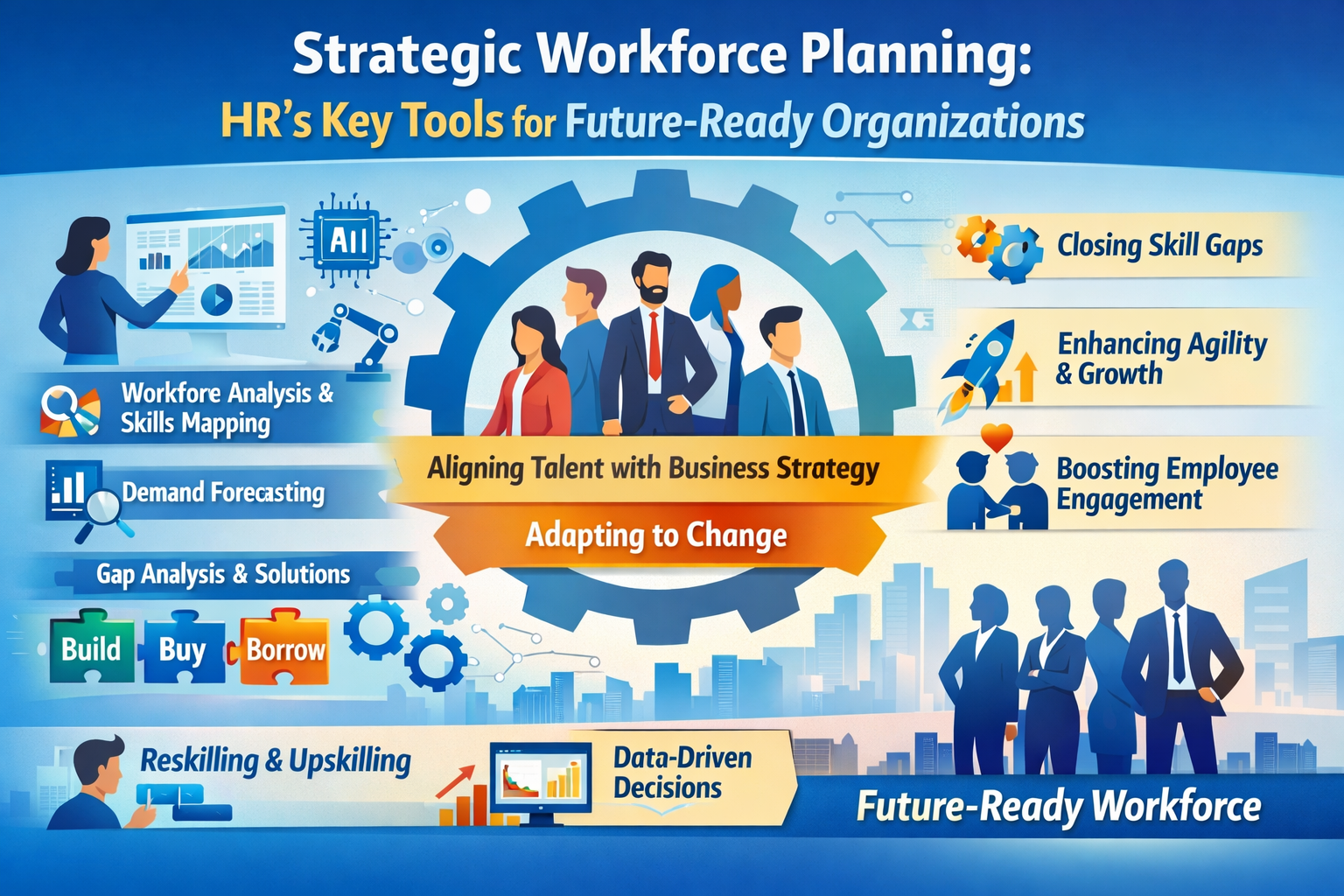
Strategic workforce planning (SWP) is a proactive, data-driven approach that the company or the organization have the right people, at the right place, with the right skills at the right roles at the right time. It moves beyond short term hiring needs and focuses on long-term talent readiness aligned with business strategy.
As businesses navigate digital transformation, automation, and globalization, HR’s role has evolved significantly. HR is no longer just an administrative function—it is now a strategic partner responsible for shaping a future-ready workforce. Strategic Workforce Planning empowers HR to anticipate challenges, mitigate talent risks, and support sustainable organizational growth.
Understanding strategic workplace planning:
Definition and core objectives:
Strategic workforce planning (SWP) is a structured process and well aligned process that aligns workforce capabilities with an organization’s long tern business goals. It’s main objective is to ensure that talent supply is able to meet future demands in both quality and quantity.
Key objectives of SWP include:
Aligning workforce capabilities with business strategy Array
Ensuring the right people, skills, and roles are available at the right time Array
Preparing the workforce for future organizational needs Array
Reducing talent shortages and operational disruptions Array
By integrating workforce planning into strategic decision making, organizations can respond more effectively to change.
Difference between strategic and traditional workforce planning:
Traditional workforce planning often focuses on immediate hiring needs and replacement roles. It is usually reactive and short-term in nature.
Traditional Workforce Planning
Strategic Workforce Planning
Short-term hiring focus
Long-term talent strategy
Reactive HR approach
Proactive HR approach
Fills current vacancies
Prepares for future roles
Limited data usage
Data-driven decision-making
Strategic Workforce Planning shifts HR from reacting to problems to anticipating future workforce challenges and opportunities.
Why Strategic Workforce Planning Is Essential for Future-Ready Organizations:
Adapting to technological and market changes:
Automation, artificial intelligence, and digital transformation are reshaping job roles across industries. Many existing roles are evolving, while new roles are emerging rapidly.
Strategic Workforce Planning helps organizations:
Understand the impact of AI, automation, and digital tools Array
Identify which roles may become obsolete Array
Prepare employees for new roles and skills Array
Build digital and future-ready capabilities Array
Without SWP, organizations risk falling behind due to skill mismatches and outdated talent structures.
Managing Talent Risks and Skill Gaps:
One of the biggest workforce challenges today is the growing skills gap. Organizations often struggle to find talent with the right capabilities when they need it most.
Strategic Workforce Planning enables HR to:
Identify future skill shortages in advance Array
Reduce dependency on last-minute or expensive hiring Array
Develop internal talent through reskilling and upskilling Array
Ensure business continuity during talent transitions Array
By proactively managing talent risks, organizations can maintain stability and performance.
Supporting Business Agility and Growth:
Future-ready organizations must be agile—able to scale up, restructure, or pivot quickly in response to market demands.
Strategic Workforce Planning supports:
Faster scaling during expansion Array
Efficient restructuring during mergers or downturns Array
Alignment of workforce strategy with business growth plans Array
Smarter allocation of talent resources Array
When workforce planning aligns with business strategy, growth becomes more sustainable and controlled.
Key components of strategic workforce planning:
Workforce planning analysis and skills mapping:
The foundation of strategic workforce planning lies in understanding the current workforce.
This includes:
Assessing existing workforce capabilities Array
Analyzing job roles, performance levels, and competencies Array
Identifying critical roles and future-ready skills Array
Mapping skills against current and future business needs Array
Skills mapping allows HR to visualize gaps and strengths across the organization.
Demand forecasting and supply analysis:
Demand forecasting focuses on predicting future workforce needs based on business goals, market trends, and technology changes.
Supply analysis involves:
Evaluating internal talent availability Array
Understanding external labor market trends Array
Identifying potential talent shortages or surpluses Array
Together, demand forecasting and supply analysis help organizations prepare for future workforce scenarios.
Gap Analysis and Workforce Solutions:
Gap analysis compares current workforce capabilities with future requirements.
Based on the gaps identified, HR can implement workforce solutions such as:
Build: Developing talent internally through training Array
Buy: Hiring external talent Array
Borrow: Using contractors or consultants Array
Automate: Leveraging technology to replace or enhance roles Array
Reskilling and upskilling strategies play a crucial role in closing workforce gaps and improving talent mobility.
Role of HR in Implementing Strategic Workforce Planning:
Collaborating with Business Leaders
Successful Strategic Workforce Planning requires close collaboration between HR and business leaders.
HR must:
Align workforce strategy with organizational goals Array
Understand business priorities and future plans Array
Involve leadership in workforce decision-making Array
Communicate workforce insights clearly and effectively Array
This collaboration ensures that workforce planning supports real business outcomes.
Leveraging HR Analytics and Data
Data and analytics are at the heart of modern Strategic Workforce Planning.
HR can use analytics to:
Predict workforce trends and attrition risks Array
Analyze productivity and performance patterns Array
Forecast future talent needs Array
Make evidence-based workforce decisions Array
HR technology and analytics tools enable more accurate and strategic planning.
Designing Learning and Development Initiatives
Learning and development are critical to building a future-ready workforce.
HR plays a key role in:
Creating future-focused training programs Array
Supporting continuous learning culture Array
Developing leadership and critical skills Array
Building strong internal talent pipelines Array
Strategic learning initiatives ensure employees are prepared for evolving roles and responsibilities.
Benefits of Strategic Workforce Planning:
Improved Talent Readiness
With Strategic Workforce Planning, organizations always have skilled employees ready for future roles. This reduces disruptions and enhances organizational resilience.
Cost Optimization and Efficiency
SWP helps organizations:
Reduce unnecessary hiring costs Array
Lower employee turnover Array
Improve utilization of existing talent Array
Avoid reactive recruitment expenses Array
Better planning leads to smarter workforce investments.
Enhanced Employee Engagement and Retention
Employees are more engaged when they see clear career paths and growth opportunities.
Strategic Workforce Planning:
Builds trust between employees and leadership Array
Increases motivation and loyalty Array
Encourages internal mobility and skill development Array
Supports long-term employee retention Array
Challenges in Strategic Workforce Planning and How HR Can Overcome Them
Lack of Data or Tools:
Many organizations struggle with limited workforce data.
HR can overcome this by:
Investing in HR technology and analytics platforms Array
Improving data quality and reporting Array
Using workforce dashboards for better visibility Array
Resistance to Change:
Change resistance is common, especially when introducing new planning processes.
Effective change management includes:
Clear communication of benefits Array
Leadership support Array
Employee involvement Array
Continuous feedback and transparency Array
Rapidly Evolving Skill Requirements:
Skills are changing faster than ever.
HR must promote:
Continuous workforce assessment Array
Agile learning programs Array
A strong learning culture Array
Regular skill updates and reviews Array
Conclusion:
Strategic Workforce Planning has become one of HR’s most powerful tools for building future-ready organizations. By aligning workforce strategy with business goals, HR enables organizations to anticipate change, manage talent risks, and drive sustainable growth.
In an era of digital disruption and talent uncertainty, organizations that adopt Strategic Workforce Planning gain a significant competitive advantage. HR’s leadership in workforce planning is no longer optional—it is essential.
By embracing Strategic Workforce Planning, organizations can build agile, skilled, and engaged workforces that are ready to meet the challenges of tomorrow.